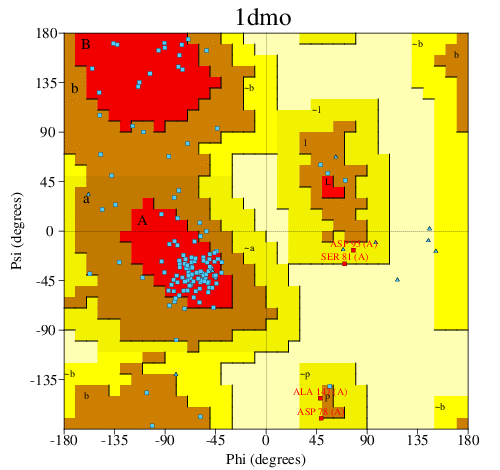
The solution structure of Ca(2+)-free calmodulin has been determined by NMR
spectroscopy, and is compared to the previously reported structure of the
Ca(2+)-saturated form. The removal of Ca2+ causes the interhelical angles of
four EF-hand motifs to increase by 36 degrees-44 degrees. This leads to major
changes in surface properties, including the closure of the deep hydrophobic
cavity essential for target protein recognition. Concerted movements of helices
A and D with respect to B and C, and of helices E and H with respect to F and G
are likely responsible for the cooperative Ca(2+)-binding property observed
between two adjacent EF-hand sites in the amino- and carboxy-terminal domains.