 |
PDBsum entry 4jav

|
|
|
|
|
|

|

|

|

|
|

|
|

|
|

|
|

|
|

|
|

|
|

|
|
|
 |

|

|
|
|
|
|
|
|
|
|
|
|
|
|
|
|
|
|
|
|
|
|
|
|
|
|
|
|
|
|
|
|
|
|
|
|
|
Transferase/signaling protein
|
PDB id
|
|
|
|
4jav
|
|
|
|
|
|
|
|
|
|
|
|
|
|
|

|

|

|
|
|
|
|
|
|
PDB id:
|
|
|
|
| Name: |
|
Transferase/signaling protein
|
|
|
Title:
|
|
Structural basis of a rationally rewired protein-protein interface (hk853wt and rr468mutant v13p, l14i, i17m and n21v)
|
|
Structure:
|
|
Histidine kinase. Chain: a, b. Fragment: hk853 cytoplasmic region, unp residues 232-489. Synonym: sensor histidine kinase. Engineered: yes. Response regulator. Chain: c, d. Synonym: rr468, response regulator receiver protein. Engineered: yes.
|
|
Source:
|
|
Thermotoga maritima. Organism_taxid: 243274. Strain: msb8. Gene: tm_0853. Expressed in: escherichia coli. Expression_system_taxid: 562. Gene: tm_0468.
|
|
Resolution:
|
|
|
3.10Å
|
R-factor:
|
0.204
|
R-free:
|
0.253
|
|
|
Authors:
|
|
A.I.Podgornaia,P.Casino,A.Marina,M.T.Laub
|
|
Key ref:
|
|
A.I.Podgornaia
et al.
(2013).
Structural basis of a rationally rewired protein-protein interface critical to bacterial signaling.
Structure,
21,
1636-1647.
PubMed id:
DOI:
|
|
|
Date:
|
|
|
19-Feb-13
|
Release date:
|
04-Sep-13
|
|
|
|
|
|
|
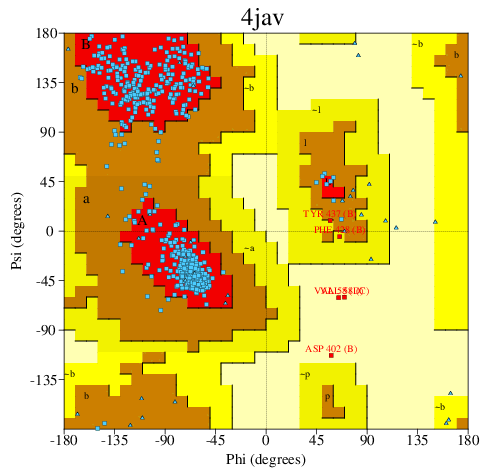
PROCHECK
|
|
|
|
|
|
Headers
|
|
|
|
References
|
|
|
|
|
|
|
|
|
|
|
|
Enzyme class:
|
|
Chains A, B:
E.C.2.7.13.3
- histidine kinase.
|
|
|
|
|
|
|
Reaction:
|
|
ATP + protein L-histidine = ADP + protein N-phospho-L-histidine
|
|
|
|
|
|
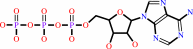 ATP
ATP
|
+
|
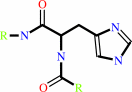 protein L-histidine
|
=
|
ADP
Bound ligand (Het Group name = )
corresponds exactly
|
+
|
protein N-phospho-L-histidine
|
|
|
|
|
|
|
|
|
|
|
|
|
Molecule diagrams generated from .mol files obtained from the
KEGG ftp site
|
|
|
|
|
|
|
|
|
|
|
|
|
|
 |
|
|
|
|
|
|
| |
|
|
| |
|
DOI no:
|
Structure
21:1636-1647
(2013)
|
|
PubMed id:
|
|
|
|
|
|
| |
|
Structural basis of a rationally rewired protein-protein interface critical to bacterial signaling.
|
|
A.I.Podgornaia,
P.Casino,
A.Marina,
M.T.Laub.
|
|
|
|
|
| |
ABSTRACT
|
|
|
|
| |
|
|
Two-component signal transduction systems typically involve a sensor histidine
kinase that specifically phosphorylates a single, cognate response regulator.
This protein-protein interaction relies on molecular recognition via a small set
of residues in each protein. To better understand how these residues determine
the specificity of kinase-substrate interactions, we rationally rewired the
interaction interface of a Thermotoga maritima two-component system,
HK853-RR468, to match that found in a different two-component system,
Escherichia coli PhoR-PhoB. The rewired proteins interacted robustly with each
other, but no longer interacted with the parent proteins. Analysis of the
crystal structures of the wild-type and mutant protein complexes and a
systematic mutagenesis study reveal how individual mutations contribute to the
rewiring of interaction specificity. Our approach and conclusions have
implications for studies of other protein-protein interactions and protein
evolution and for the design of novel protein interfaces.
|
|
|
|
|
|
|
|
|
|
|
|
|
|
|
|
|
|
 |
 |
 |
|
|


 Links
Links


