 |
PDBsum entry 2kri

|
|
|
|
|
|

|

|

|

|
|

|
|

|
|

|
|

|
|

|
|
|
 |

|

|
|
|
|
|
|
|
|
|
|
|
|
|
|
|
|
|
|
|
|
|
|
|
|
|
|
|
|
|
|
|
|
|
|
Protein binding/endocytosis
|
PDB id
|
|
|
|
2kri
|
|
|
|
|
|
|
|
|
|
|
|
|
|
|

|

|

|
|
|
|
|
|
|
|
 |
Contents |
 |
|
|
|
|
|
|
|
|
|
|
* Residue conservation analysis
|
|
|
|
|
|
PDB id:
|
|
|
|
| Name: |
|
Protein binding/endocytosis
|
|
|
Title:
|
|
Structure of a complex between domain v of beta2-glycoprotein i and the fourth ligand-binding module from ldlr determined with haddock
|
|
Structure:
|
|
Beta-2-glycoprotein 1. Chain: a. Fragment: sushi-like domain. Synonym: beta-2-glycoprotein i, beta(2)gpi, b2gpi, apolipoprotein h, apo-h, activated protein c-binding protein, apc inhibitor, anticardiolipin cofactor. Engineered: yes. Low-density lipoprotein receptor. Chain: b.
|
|
Source:
|
|
Homo sapiens. Human. Organism_taxid: 9606. Gene: apoh, b2g1. Expressed in: escherichia coli. Expression_system_taxid: 562. Gene: ldlr.
|
|
NMR struc:
|
|
1 models
|
|
|
Authors:
|
|
N.Beglova
|
|
Key ref:
|
|
C.J.Lee
et al.
(2010).
Mode of interaction between beta2GPI and lipoprotein receptors suggests mutually exclusive binding of beta2GPI to the receptors and anionic phospholipids.
Structure,
18,
366-376.
PubMed id:
|
|
|
Date:
|
|
|
18-Dec-09
|
Release date:
|
31-Mar-10
|
|
|
|
|
|
|
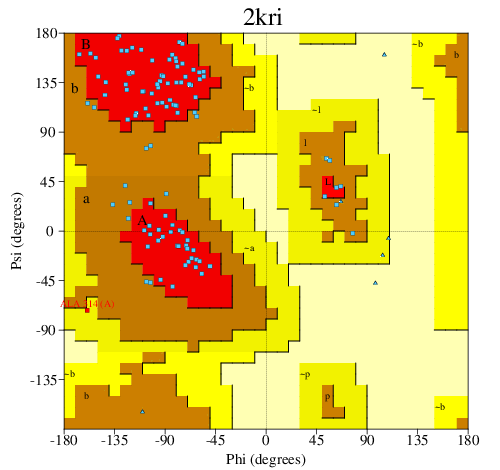
PROCHECK
|
|
|
|
|
|
Headers
|
|
|
|
References
|
|
|
|
|
|
|
|
|
|
|
|
|
|
|
|
 |
|
|
|
|
|
|
| |
|
|
Structure
18:366-376
(2010)
|
|
PubMed id:
|
|
|
|
|
|
| |
|
Mode of interaction between beta2GPI and lipoprotein receptors suggests mutually exclusive binding of beta2GPI to the receptors and anionic phospholipids.
|
|
C.J.Lee,
A.De Biasio,
N.Beglova.
|
|
|
|
|
| |
ABSTRACT
|
|
|
|
| |
|
|
Lipoprotein receptors of the LDLR family serve as clearance receptors for
beta2GPI and as signaling receptors for the beta2GPI/antibody complexes in
antiphospholipid syndrome. We compared four ligand-binding LA modules from LDLR
and ApoER2 for their ability to bind domain V of beta2GPI (beta2GPI-DV). We
found that the LA modules capable of binding beta2GPI-DV interact with the same
region on beta2GPI-DV using residues at their calcium-coordination site. The
structure of a complex between beta2GPI-DV and LA4 of LDLR, solved by molecular
docking guided by NMR-derived restraints and extensively validated, represents
the general mode of interaction between beta2GPI and lipoprotein receptors. We
have shown that beta2GPI-DV cannot simultaneously bind to lipoprotein receptors
and anionic phospholipids, suggesting that the association of
beta2GPI/anti-beta2GPI antibody complexes with anionic phospholipids will
interfere with lipoprotein receptors' signaling in APS.
|
|
|
|
|
|
|
|
|
|
|
|
|
|
|
|
|
|
 |
 |
 |
|
|


 Links
Links


